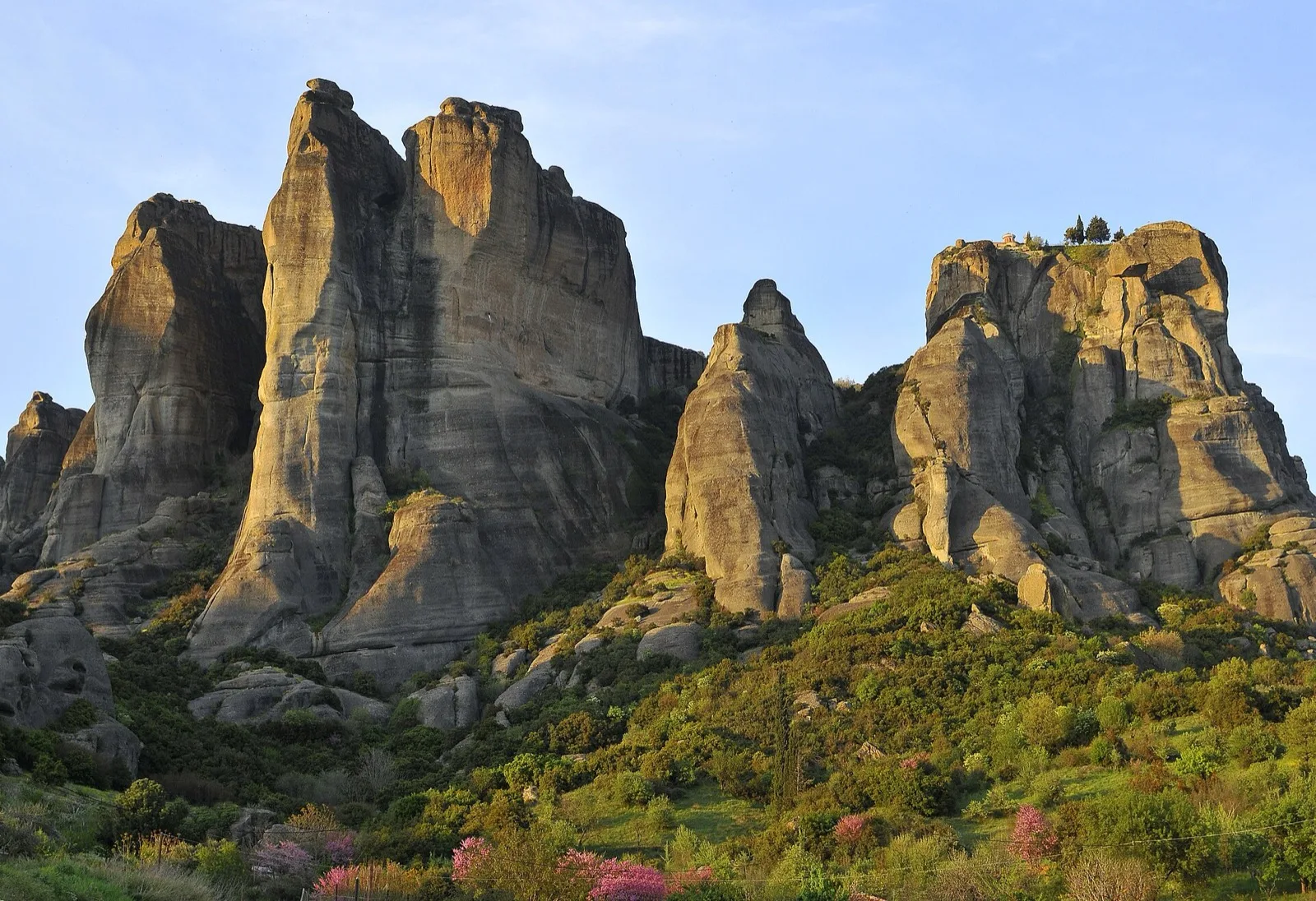
Kalambaka, Kastraki und Umgebung
Wofür die einzelnen Stadtteile eigentlich da sind und wie sie sich zu Fuß verbinden.
How the city is laid out
Two settlements and a rock loop: Kalambaka (39.7044, 21.6269) is the train and KTEL hub; Kastraki (39.7169, 21.6181) sits under the pillars; the monastery circuit runs above both; Theopetra village is the cave stop to the southeast.
This is not a city of districts. Kalambaka fills the valley floor along the Peneios. Kastraki is the village on the first rise toward the sandstone. The six active monasteries sit on the circuit road and footpaths above. Theopetra is a separate village with the prehistoric cave — taxi or car, no regular tourist bus.
KTEL Kalampaka–Meteora kostet 2,00 € (ktel-trikala.gr, geprüft im August 2026). Trikala kostet 2,90 €, wenn Sie für ein paar Stunden eine echte Stadt erleben möchten. Gehen Sie durch die Mitte von Kalambaka; zu Fuß oder hüpfen zu Kastraki; Gehen Sie nicht davon aus, dass die gesamte Strecke ein Sonntagsspaziergang in der Sommerhitze ist.
Das Zentrum
Kalambaka is the centre that matters — station, KTEL stop, hotels, pharmacies, and tavernas on the plateia. Arrive by train or coach and you are already in the right place to dump bags and eat. Mid-range rooms here typically €55–110/night (indicative, checked Aug 2026); hostels €20–35. The plateia is where dinner happens after the rocks.
From the square you walk to the Byzantine Dormition of the Virgin (Koimisis) mentioned by Infotourist — ticket and hours check locally / Ephorate, not guessed here. The monastery bus and taxis leave from the hub, not from the pillars. If you only stay one night, stay in Kalambaka unless you specifically want a dawn walk from Kastraki. See Übernachten für den Kompromiss.
Die Altstadt
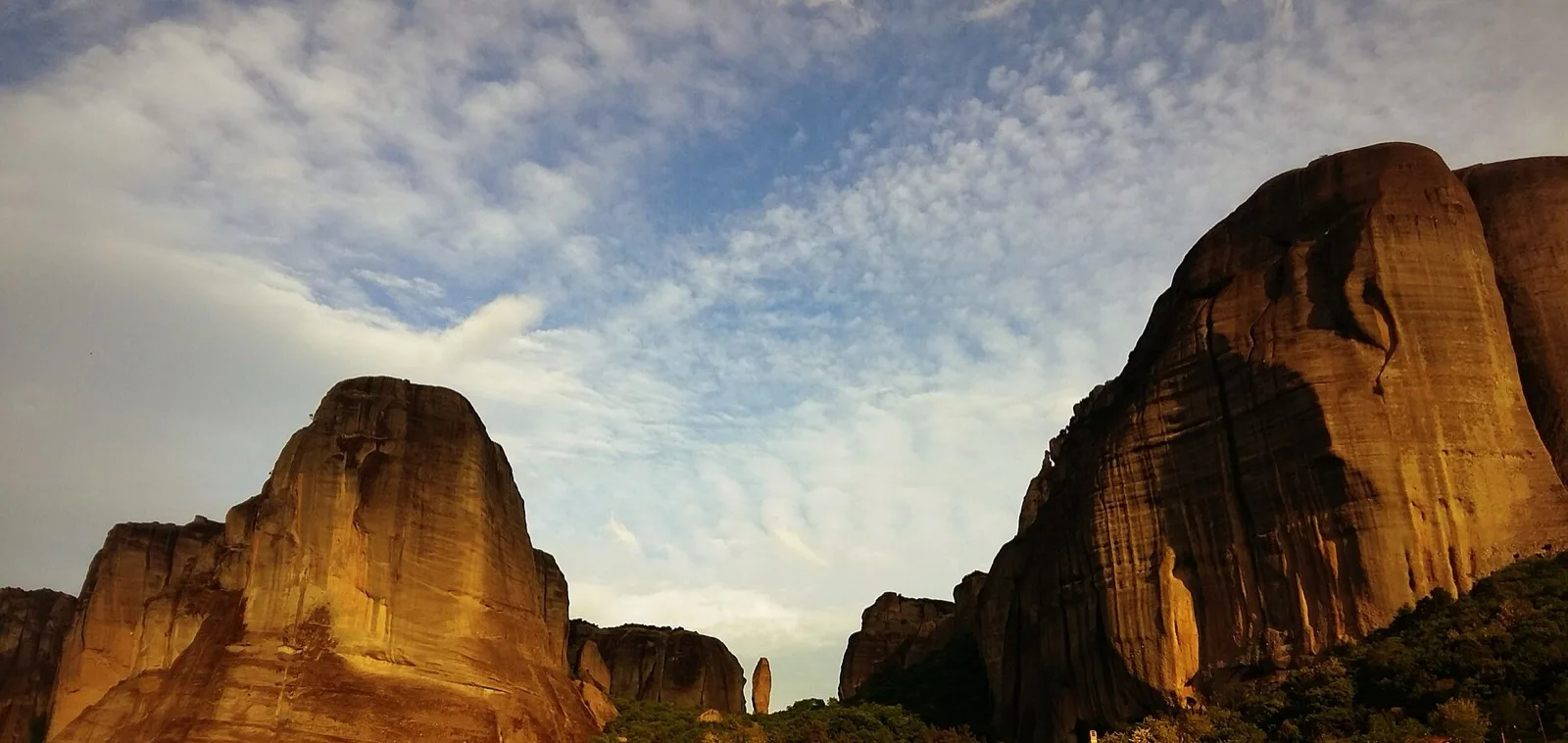
Kastraki is the old village under the pillars. Lanes are short, rooms often face the sandstone, and evenings go quiet earlier than the Kalambaka plateia. This is the base for hikers who want to be on a path at first light without waiting for a bus. View rooms cost more in peak — give a band, not a hotel name: expect the mid €55–110 range to stretch upward when the terrace faces the rocks (indicative, check locally).
It is still a village. Shops are fewer. Dinner options are smaller tavernas, not a strip. The uphill walk from Kalambaka is real; a taxi or the €2.00 KTEL hop is the lazy option. Quiet hours near the monasteries apply — keep voices down on the lanes after dark.
Wo die Stadt ausgeht

Nach Einbruch der Dunkelheit sitzt das Leben auf dem Kalambaka Plateia and a few bars on the streets around it. Kastraki adds village tavernas that wind down earlier. There is no club district. The last KTEL monastery bus does not run late — plan a taxi (+30 24320 22310) if you stay up on the rocks or in Kastraki after dinner in town.
Respektieren Sie ruhige Stunden in der Nähe der Klöster. Dies ist eine lebendige Klosterlandschaft. Eine ausführliche Abendbesprechung – Zeitplan, voraussichtliche Getränkepreise und Anreise nach Hause – steht auf dem Programm Nachtleben. If you want a larger town after dark, Trikala is €2.90 on KTEL (ktel-trikala.gr, checked Aug 2026), but that is a separate evening, not a stroll.
Wo die Einheimischen tatsächlich leben
Most residents live in Kalambaka’s grid away from the tourist plateia — supermarkets, schools, the Health Centre, and the streets toward the station. Kastraki is smaller and more visitor-facing on the rock side, still a village on the back lanes. Theopetra is a working village with a cave and documentation centre, not a hotel strip.
Der Klosterrundgang is not a neighbourhood. Nobody “lives on the rocks” in the visitor sense — the six active houses are monastic communities with entry typically €5 cash each (confirm at the gate). Day-trippers pass through; overnight stays belong in Kalambaka or Kastraki. For a rainy half-day, Theopetra Cave is €5 full / €3 reduced, 08:30–15:30, closed Tuesday (odysseus.culture.gr).
Neighbourhood questions
Which neighbourhood should I stay in Meteora?
Kalambaka if you want the train and KTEL hub, tavernas on the plateia, and an easy first night. Kastraki if you want dawn walks under the rocks and quieter evenings. View rooms cost more in peak — book summer weekends and Orthodox Easter early. Theopetra is a cave stop, not a base.
Welche Bereiche von Meteora sollte ich nachts meiden?
There is no visitor no-go district. The risk is practical: unlit monastery roads, last KTEL that does not run late, and quiet hours near the houses. Walk the lit Kalambaka streets or take a taxi (+30 24320 22310). Keep noise down in Kastraki. The circuit itself is for daylight.
Kann man in Meteora zwischen den Stadtteilen laufen?
Kalambaka and Kastraki join on an uphill road — walkable if you accept the climb, or a short taxi or KTEL hop (Kalampaka–Meteora €2.00, ktel-trikala.gr, Aug 2026). The monastery circuit is a separate loop above both. Theopetra village is a taxi or car ride; no regular tourist bus.